Quick Answer
Polycystic Ovary Syndrome (PCOS) is a hormonal and metabolic disorder, and its primary treatment is lifestyle changes and medication prescribed by a gynecologist. Cupping is used as an integrative support; a quasi-experimental study on 66 women found that wet cupping improved cycle regularity and reduced hirsutism over 12 weeks.
The strongest evidence in integrative treatment for PCOS comes from (acupuncture combined with cupping), which meta-analyses have shown improves LH, testosterone, insulin resistance, and ovulation rate. That is why we treat the condition at the center as an integrated program rather than a single session.
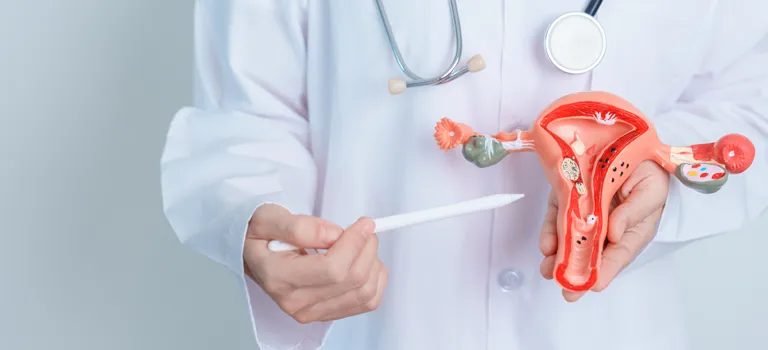
What Is PCOS, and Why Treating the "Cyst" Isn't Enough?
Polycystic Ovary Syndrome is not about cysts that need removing — it's a hormonal imbalance (elevated LH and androgens) combined with insulin resistance, resulting in delayed ovulation, irregular cycles, weight gain, hirsutism, and sometimes delayed pregnancy.
That is why any successful treatment must target the metabolic root — insulin, weight, and inflammation — not just the symptoms. This is where combining cupping with nutrition and movement comes in.
How Can Cupping Help? (The Science, Not the Promises)
When Should Cupping Be Done Relative to the Menstrual Cycle?
Timing matters in PCOS and delayed-pregnancy cases: wet cupping is done from day 3 to day 7 of the cycle, and is not done if pregnancy is possible. During the cycle itself, only dry and moving cupping are used. The specialist determines what is most suitable for your case after reviewing your lab results.
Important: If you are using ovulation-triggering injections or are in an IVF program, coordinating with your doctor first is a requirement before any session.
What Does the Scientific Research Say?
2021 Quasi-Experimental Study — 66 Women with PCOS
Published in the Journal of Complementary and Integrative Medicine, participants underwent wet cupping on the calf muscles on day 26 of the cycle, then were followed for 12 weeks. Result: a significant improvement in cycle regularity and a reduction in the hirsutism score after 4 and 12 weeks.
2025 Meta-Analysis — 51 Studies on Acupuncture and Cupping in PCOS
Published in Annals of Medicine, the studied methods included "acupuncture combined with cupping," all of which showed improvement in hormonal and metabolic markers and weight compared to metformin, with the researchers noting variation between studies and risk of bias.
2024 Comprehensive Review — 20 Meta-Analyses on Over 27,000 Patients
Published in Frontiers in Medicine, acupuncture-related treatments were linked to higher ovulation and pregnancy rates and lower LH, testosterone, insulin resistance, and BMI. This is evidence on acupuncture combined with cupping, but it explains why our program is built on combining methods.
The Evidence, Honestly Summarized
Cupping may help with cycle regularity and easing some symptoms, though the evidence is preliminary (one quasi-experimental study). The strongest results come when it is combined with nutrition and weight management, plus the medication prescribed by your gynecologist.
How Is the Session Done at Khaled Al-Zallal Centers?
- Assessment in the independent women's section with a licensed specialist: reviewing lab results (hormones, blood sugar and insulin, iron) and calculating the cycle day.
- A moving-cupping session with electric cups, followed by wet cupping on the points approved in the center's protocol, with new tools for each client.
- A nutrition plan built around reducing insulin resistance, plus simple resistance exercises the client is trained on at the clinic, as part of the integrated course.
- Follow-up on the cycle and symptoms via the app, with reassessment after the course.
The approved protocol for PCOS starts with a course of three sessions as part of the integrated PCOS treatment course, and in cases of delayed pregnancy a maintenance session is added after a rest period determined by the specialist. The best results in our experience came with commitment to the nutrition plan, not cupping alone.
Book Your Consultation
Khaled Al-Zallal Cupping Centers — three branches in Riyadh (Al-Sahafa, Al-Nuzhah, Al-Hamra), a licensed center with a qualified medical staff, new sterilized tools for every client, and an independent women's section.
Open Saturday to Thursday, 8:15 AM – 10:30 PM (Friday closed). Book your appointment via WhatsApp or the website, and the specialist will determine what's best for your case.
Conclusion
PCOS is a long-term condition managed with lifestyle changes and medication, and cupping is a promising integrative support within a comprehensive program rather than a standalone session. This content is for health awareness only and does not replace consultation with a specialist physician. Cupping is an integrative support alongside your treatment plan, not a substitute for it, and the decision on whether it suits your case rests with the specialist after evaluation.