Quick Answer
Wet (bloodletting) cupping is one of the integrative treatments most supported by research for lower-back pain, the region from which sciatic pain usually originates. Meta-analyses of randomized trials have shown it reduces pain and functional disability over several weeks, with wet cupping showing a stronger effect than dry cupping.
However, it does not treat the underlying compression itself, such as an advanced disc herniation. That is why we use it at the center as an integrative support alongside a physician's assessment and physical therapy — not as a replacement for either.
What Is Sciatica, and Why Does the Pain Travel Down the Leg?
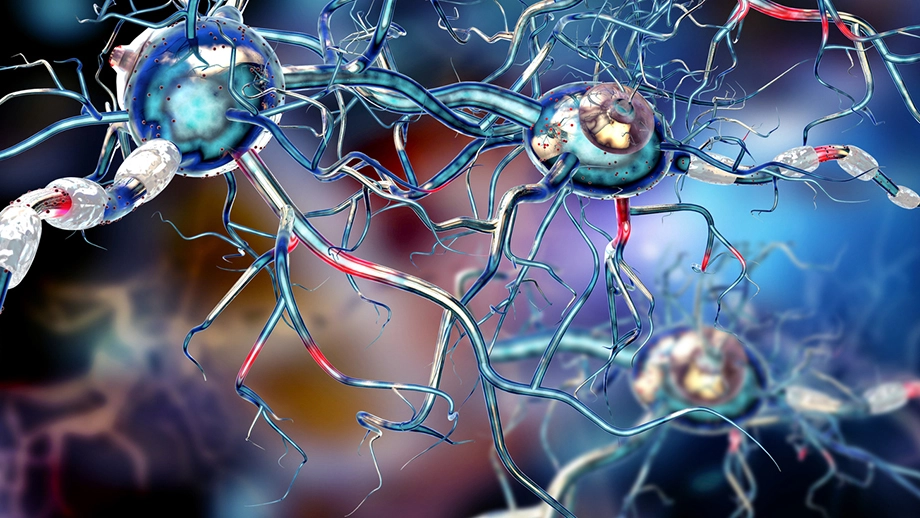
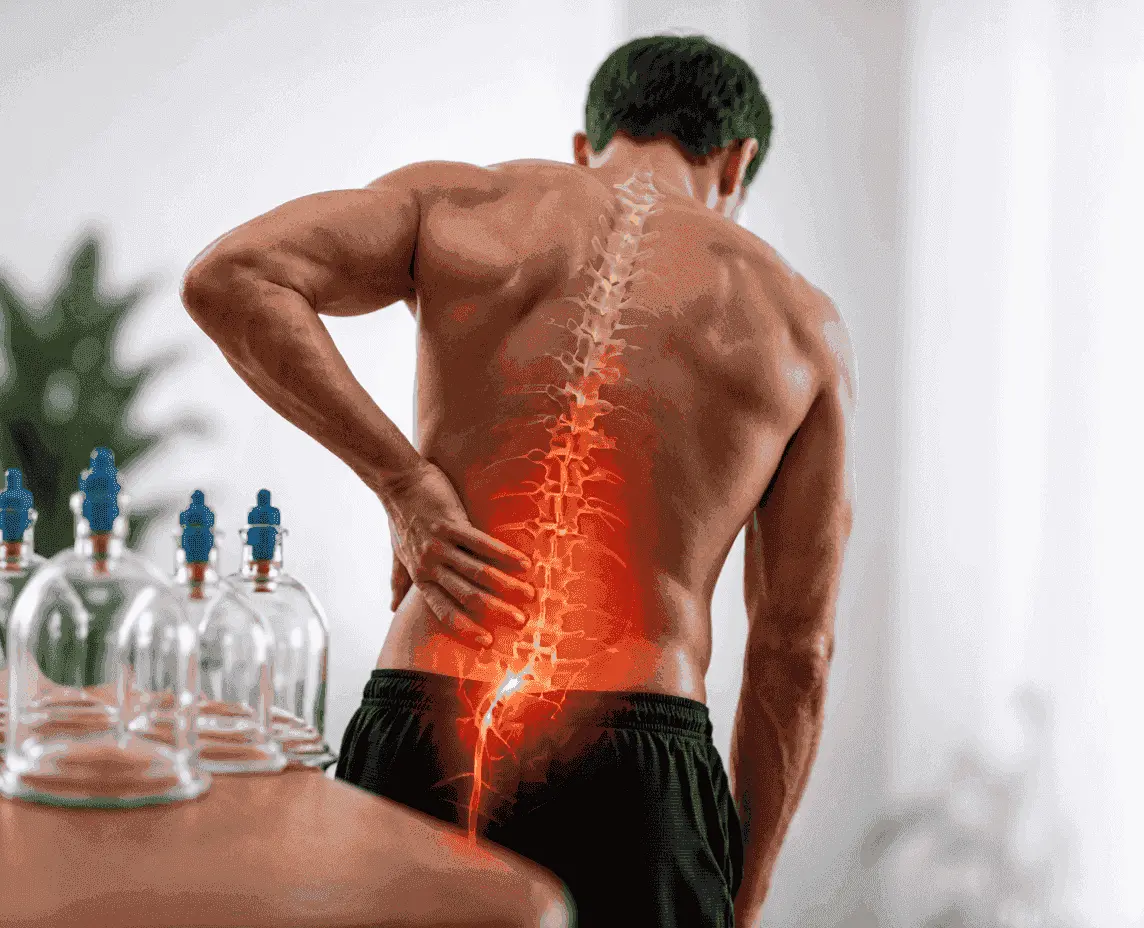
Sciatica is not a disease in itself but a symptom. It occurs when the sciatic nerve — the largest nerve in the body — becomes irritated or compressed in the lower back, causing pain to travel from the back through the buttocks and down the back of the thigh, sometimes reaching the foot. It may be accompanied by numbness, tingling, or weakness in the leg.
The most common causes are a herniated disc, spinal canal stenosis, piriformis syndrome, or chronic muscle tightness in the lower back and pelvis. Identifying the cause is what determines whether cupping is suitable for your case.
How Can Cupping Help with Sciatica?
Cupping does not "pull" the nerve back into place, nor does it reposition a herniated disc, and any promise of that is inaccurate. Based on current scientific understanding, here is what it actually does:
Which Type of Cupping Suits Sciatica?
The studies draw a clear distinction between two types: wet (bloodletting) cupping shows the strongest effect on back pain according to the 2024 and 2022 meta-analyses, while dry and moving (massage) cupping are useful for relaxing muscles and improving mobility, though a randomized Brazilian trial (2021) found no superiority over sham cupping in chronic non-specific back pain. That is why the center relies on a combined approach: moving cupping to relax the muscles, followed by wet cupping on the therapeutic points, with the specialist determining the exact points based on the pain pattern after examination.
What Does the Scientific Research Say?
There are no large trials dedicated to sciatica alone, but studies on lower-back pain — the primary source of sciatica — are numerous and of reasonable quality:
2024 Meta-Analysis — 11 Randomized Trials, 921 Patients
Published in Complementary Therapies in Medicine, this analysis concluded that cupping significantly improves pain within 2–8 weeks of treatment (effect size 1.09), with wet cupping proving effective (effect size 1.5) while dry cupping did not reach statistical significance. Cupping's effect was greater than medication and usual care, with improved functional disability lasting 1–6 months of follow-up. The researchers noted considerable variation between studies in application methods.
2015 Saudi Randomized Trial (Albedah and Colleagues) — 80 Patients Across Three Hospitals
Six wet cupping sessions over two weeks reduced pain from 57.9 to 29.2 on a 100-point scale, and improved the Oswestry Disability Index from 35.4 to 19.6 compared to the control group. The improvement persisted for two weeks after the sessions ended, with no side effects recorded.
2018 Iranian Trial — 180 Patients
This trial compared wet cupping to conventional treatment (rest and medication). Results were similar in the first month, but the cupping group clearly outperformed the control group at the third and sixth month, indicating a longer-lasting effect.
The Evidence, Honestly Summarized
The evidence for relieving lower-back pain with wet cupping is good to moderate, and it outperforms the evidence for many other integrative therapies. Evidence specific to sciatica as an independent diagnosis remains limited, and there is no evidence that cupping treats a herniated disc or permanently prevents pain from recurring. Bottom line: a suitable and safe option for pain relief and improved mobility within a comprehensive treatment plan, especially when a muscular component is clearly present.
How Is the Session Done at Khaled Al-Zallal Centers?
- Initial assessment: blood pressure and blood sugar checks, medication and lab review, and a movement exam to map the pain pattern and its muscular component.
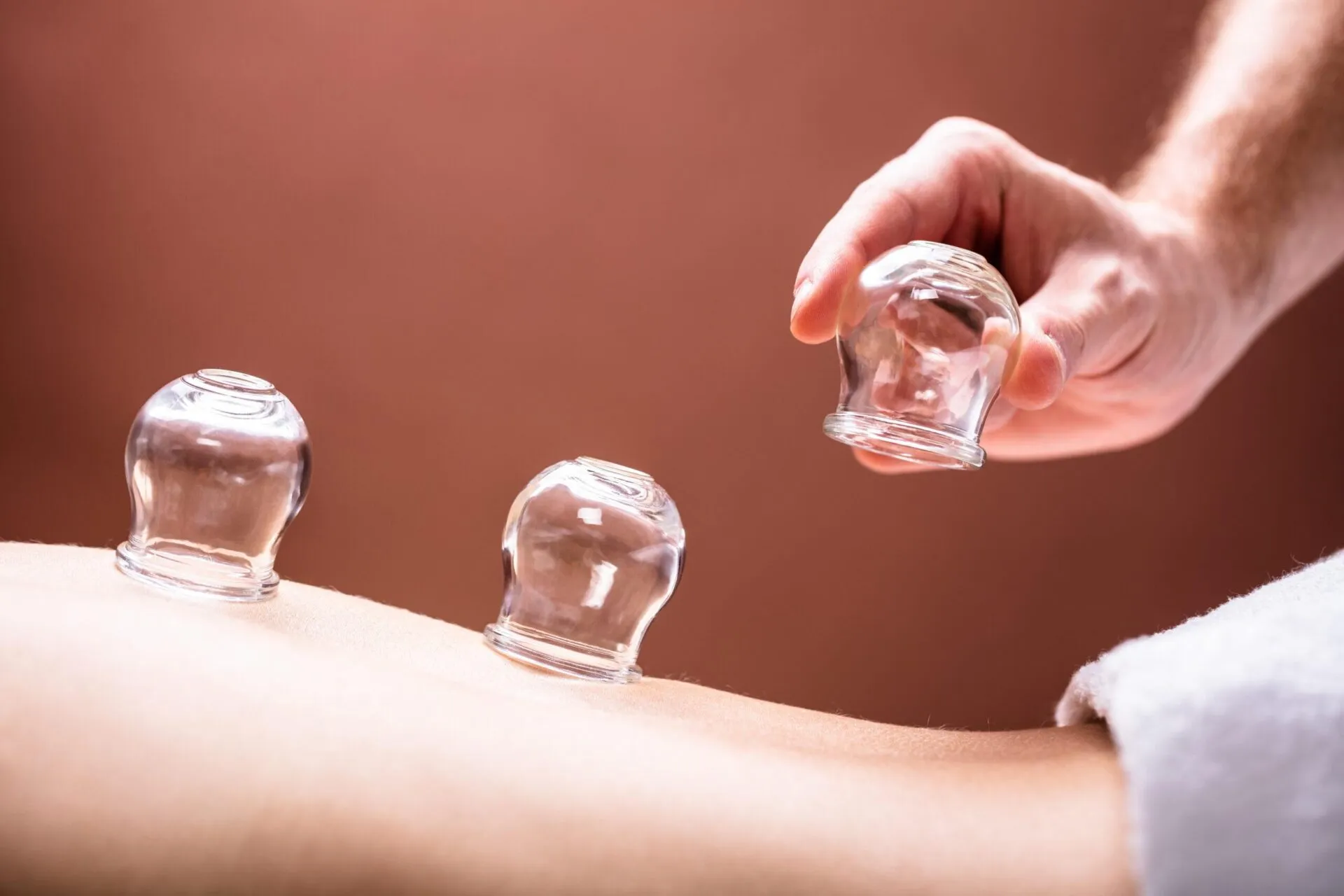
- A moving-cupping session with electric cups to relax the lower back and gluteal muscles.
- Wet cupping on the therapeutic points using a sterile medical blade and single-use tools opened in front of you.
- Post-session instructions, plus simple stretches for the piriformis and lower back explained to you at the clinic.
Most sciatica cases are treated with a course of three sessions, with the specialist deciding the timing between them and whether the case would benefit from the integrated sciatica treatment course (cupping + an anti-inflammatory nutrition plan + exercises).
Book Your Consultation
Khaled Al-Zallal Cupping Centers — three branches in Riyadh (Al-Sahafa, Al-Nuzhah, Al-Hamra), a licensed center with a qualified medical staff, new sterilized tools for every client, and an independent women's section.
Open Saturday to Thursday, 8:15 AM – 10:30 PM (Friday closed). Book your appointment via WhatsApp or the website, and the specialist will determine what's best for your case.
Conclusion
Wet cupping is an integrative option backed by meaningful evidence for relieving sciatic pain stemming from lower-back pain, and it works best when combined with medical assessment and physical therapy rather than replacing them. This content is for health awareness only and does not replace consultation with a specialist physician. Cupping is an integrative support alongside your treatment plan, not a substitute for it, and the decision on whether it suits your case rests with the specialist after evaluation.