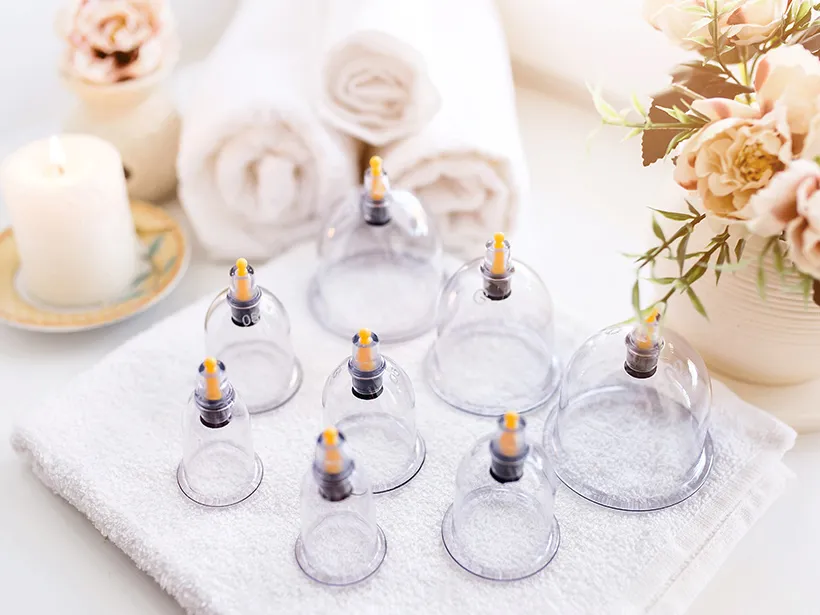
Therapeutic Cupping: A New Window of Hope in Supporting Infertility Treatment for Men and Women
Overview of Fertility Challenges:
Infertility represents a major challenge for many couples who wish to conceive. In male infertility, it is often associated with a low sperm count (oligospermia) or complete absence of sperm (azoospermia). A low sperm count occurs when semen contains fewer than 15 million sperm per milliliter, reducing the chances of fertilization.
Female infertility includes a wide range of factors that affect ovulation, fertilization, or implantation of the fertilized egg in the uterus.
Male Infertility: Common Causes
Sperm production is a complex process requiring precise interaction between the testes, pituitary gland, and hypothalamus. Common medical causes of male infertility include:
- Varicocele: Swelling of the veins draining the testicle, a common and treatable cause of infertility.
- Infections: Certain infections can interfere with sperm production, damage sperm quality, or cause scarring that blocks sperm passage.
- Ejaculation problems: Such as retrograde ejaculation, where semen enters the bladder instead of exiting the body.
- Antisperm antibodies: When the immune system mistakenly attacks sperm as foreign bodies.
- Tumors: Both malignant and benign tumors in reproductive organs or hormone-producing glands.
- Undescended testicles: When one or both testicles fail to descend into the scrotum.
- Hormonal imbalance: Disruption of hormones essential for sperm production.
- Certain medications: Some drugs can negatively affect sperm production and male fertility.
Therapeutic Cupping: A New Perspective in Improving Male Fertility
Therapeutic cupping offers a unique perspective in supporting male fertility through:
- Improving blood circulation to the testes: Enhancing their ability to produce adequate sperm.
- Reducing prostate congestion: By stimulating the release of nitric oxide, which helps dilate blood vessels and improve semen production.
- Reducing edema in the epididymis and reproductive ducts: Supporting lymphatic drainage and improving ejaculation function.
- Removing waste products and aged blood cells: That may negatively affect sperm production.
- Stimulating the immune system: Reducing the likelihood of immune attacks on sperm cells.
Female Infertility: Common Causes
Female infertility is a complex condition, with ovulation disorders playing a major role. Key causes include:
- Hormonal problems: Imbalance of FSH and LH hormones, stress-related hormonal disruption, obesity or extreme weight loss, and elevated prolactin levels.
- Ovarian issues: Such as polycystic ovary syndrome (PCOS), which affects hormone balance and ovulation.
- Luteal phase problems: When the ovary does not produce enough progesterone to support implantation.
- Failure of egg production: Often due to immune system disorders where the body attacks its own eggs.
- Fallopian tube damage: Preventing fertilization or egg transport.
Therapeutic Cupping: A New Perspective in Improving Female Fertility
Therapeutic cupping may support female fertility through:
- Improving blood circulation to the ovaries: Enhancing their ability to produce healthy eggs.
- Reducing ovarian cysts and endometriosis symptoms: Through improved blood flow and vascular dilation.
- Reducing fluid retention in the fallopian tubes: Supporting egg transport and implantation.
- Removing waste and stagnant blood: That may affect reproductive health.
- Stimulating the immune system: Reducing abnormal immune reactions against reproductive organs.
Conclusion
Therapeutic cupping, as practiced in Khalid Al-Zallal cupping centers, presents an innovative supportive approach for enhancing fertility in both men and women through its positive effects on blood circulation, hormones, and the immune system. While research is still ongoing, this ancient therapy holds promising potential in improving reproductive health and increasing the chances of conception.